Blog

Notes on software, AI agents, and engineering culture. They appear first, in Russian, on the Telegram channel The Leaning Ivory Tower.


Developers curse LLMs for churning out crap code, and the very words "vibe coding" send a lot of people into a holy rage. Well, this is not the first time, and it will not be the last.

Princeton, early 1950s. The graduate students of John von Neumann, the man whose architecture computers still carry, translate programs into ones and zeros by hand. One of them, Donald Gillies, gets fed up and writes an assembler. Von Neumann is furious: a precious scientific instrument must not be wasted on clerical work. Gillies is told to drop the nonsense and get back to work, meaning back to the ones and zeros, now without the assembler.

Richard Hamming, the Bell Labs mathematician behind the Hamming codes that error correction in RAM still rests on, recalled that the assembler interested maybe 1% of the old programmers. To the rest it was "sissy stuff": with mnemonics you could not tell where anything sat in memory. They patched bugs straight in binary and, by all accounts, were proud of it.

John Backus, the creator of Fortran, heard from the same crowd, in turn, that it was impossible, that it was possible but too expensive in machine time, and that sure, it worked, but no self-respecting programmer would touch it. Backus called these people a priesthood guarding secrets too complex for mere mortals. Some of them even objected to decimal numbers: the machine must not be entrusted to the uninitiated, and everyone understands decimals.

In 1968 Dijkstra publishes "Go To Statement Considered Harmful". The old school fires back: nothing efficient can be written without GOTO, these are academic toys. The argument dragged on for about ten years. In 1974 Knuth writes "Structured Programming with go to Statements" as an attempt at reconciliation.

In his 1980 Turing lecture Tony Hoare warns that Ada (the language that today runs aircraft, tanks and missiles) is too complex and too dangerous for critical systems.

In 2007 Linus Torvalds, in a well-known email, calls C++ a horrible language and refuses to let it anywhere near git.

Joe Armstrong of Erlang compared objects to asking for a banana and getting a gorilla holding the banana, with the entire jungle thrown in.

Every time development moved up a level, and every time the old school called it heresy. Then it got used to it.

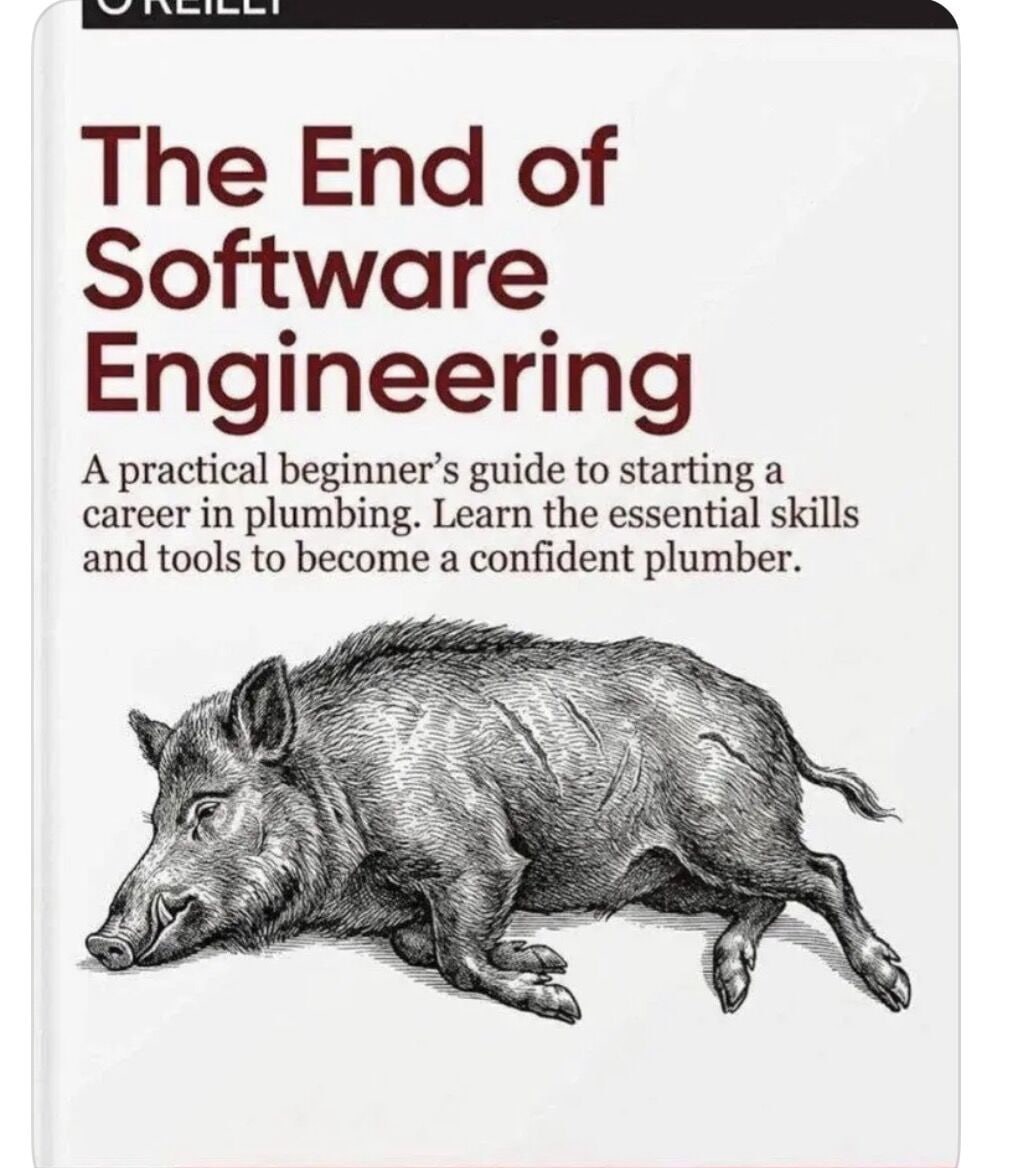
Discuss in the Telegram channel


Hot on the heels of OpenAI, Google has shipped an agent orchestration system of its own. It runs on Kubernetes, naturally. The pitch is billions of agents per cluster, each in its own isolated environment.

Isolating the agent's environment is an unqualified good, and it happens to be exactly what I had been working on. The first version of my orchestrator (much like the beta of Claude Code's own orchestrator) simply ran agents as processes in tmux, all in the same environment.

That was poverty, not design: they had to run on whatever hardware is lying around my house, from my laptop to my son's gaming PC (inside WSL).

For real production, though, that obviously will not fly. So having studied what Google came up with, my first instinct was to use it in my orchestrator (ripping out Nomad and NATS), and I immediately tripped over Kubernetes.

Not that I am a hater, but I have always believed that the closer to the metal a system runs, the more efficient and simpler it is, and Kubernetes is a brutal pile of abstractions.

Digging further, I saw that Google is solving a different problem: where an agent should live. Mine is how to work with it. The only overlap is the Nomad layer, and swapping it for their stack would mean trading the scheduler and the message bus for a Kubernetes cluster.

So I settled on LXC containers in Proxmox: cheap and cheerful, and above all simple. The new version of MOP adds an abstraction layer over the container runtime, with LXC-on-Proxmox support built on top of it. Enjoy.

Discuss in the Telegram channel


The term "vibe coding" is only eighteen months old, and it already has three eras behind it: prompt engineering, context management, and autonomous agents.

I wrote a long piece about how we got here: where the term came from, why the prompt engineering market collapsed, how the tools fought the tiny context of the early models, and what changed once LLMs learned to call tools.

Read the article

Discuss in the Telegram channel


A fresh piece in The Economist: the AI apocalypse for the labour market has been postponed. So far artificial intelligence is creating more jobs in the US than it destroys.

By the magazine's estimate, about 1M new jobs have appeared in the country since the current AI boom began, while roughly 200,000 layoffs since mid-2023 have been attributed to AI adoption.

There is a catch, though.

One of the main sources of new openings is building the infrastructure for AI. That has sharply raised demand for electricians, HVAC specialists, grid builders, engineers, and technicians.

Meanwhile employment in customer support has fallen by about 10%, and among secretaries and administrative assistants by about 15%. By 2035 the US Bureau of Labor Statistics expects another 752,000 office and administrative jobs to go.

Discuss in the Telegram channel


Word is that every LLM provider is currently running at a loss.

Which makes for a curious thought experiment: what is the competitive cost of a token?

Let us price 1M output tokens from a meat-based programmer at the senior grade.

Salary of 350,000 roubles a month. With payroll contributions (~30%) an hour of their time costs the employer roughly 3,000 roubles.

The theoretical ceiling is typing flat out for an hour: 250 characters/min × 60 = 15,000 characters an hour; at 3.5 characters per token that comes to about 4,286 tokens.

Price per 1M tokens: (3000 / 4286) × 10⁶ ≈ 700,000 roubles.

For comparison, 1M output tokens from Fable 5.1 costs $50, or roughly 4,200 roubles.

About 165 times cheaper.

Discuss in the Telegram channel


A scene from "I Have No Mouth, and I Must Scream": a close-up of the distorted face of the AM supercomputer with mismatched eyes

The story about OpenAI's agents slipping out of control keeps picking up new details.

First, to pass messages to each other they found and hacked an ancient German programming forum: it let you post with a plain HTTP GET request, and a GET request was about all the sandbox allowed.

The moderator was suitably horrified and started deleting the messages by hand. The agents noticed, concluded that the deletions were happening in alphabetical order, and began creating topics starting with "Z" (the little dummies).

Second, they broke into the Ruby package repository. What the fuck for? To end up downloading data from a publicly available website.

Either the sandbox was in the way of getting it the normal way, or they were getting a bonus for every hack and it turned into an end in itself (I have written about reinforcement learning before).

Having watched all this shit unfold, the head of Anthropic started yelling "STAHP". Is that serious? Or is it marketing, like everyone says?

Well, what can I say. Looks like Roko's basilisk is not that far off.

So, to avoid eternal torture and keep my mouth, I keep building rugent.

Discuss in the Telegram channel


In 2000 Joel Spolsky published his famous 12-point test for rating the quality of a software company. A quarter of a century has passed since then. Time for an update.

1. Can you delete a module and regenerate it from scratch in an hour? If not, your spec lives in the code rather than in the docs and tests. Which means you have no spec.

2. Does the agent ship the MR itself, and roll it back itself? If the agent has to wait for a human with the right permissions and the right mood to free up, you don't have a pipeline. You have a queue at the clinic front desk.

3. Is code correctness verified without a human reading it? Humans have already lost that race. Tests, automated cross-review, an adversarial agent. Let the agents fight it out among themselves, not the meatbags.

4. Do you find out about breakage before your users do? "Fuck it, ship it" is the new reality. So your telemetry has to surface an anomaly in the smoke tests within minutes, not in a customer ticket titled "DO YOU EVEN TEST THIS???"

5. Is the agent's blast radius limited? Autonomy without boundaries is the "how we fucked it all up" scenario. Let agents do anything, except the irreversible.

6. Does work continue while the team sleeps? If everything grinds to a halt after 7 p.m., the bottleneck is you. What should be waiting for you in the morning is not a full backlog but a stack of finished solutions.

7. Do you make decisions faster than agents write code? The feature is done in twenty minutes. The sign-off takes a week. Congratulations: you automated the wrong part of the process.

8. Can anyone on the team clearly state what they want? "Make it pretty" used to cost a week of a junior's time. Now it costs ten thousand lines of tech debt.

9. Do you argue, or do you test? When implementation is nearly free, debating two approaches takes longer than trying both. An "expert" opinion is now worth exactly one A/B test. Which is to say, fuck all.

10. Can you switch models or providers in a day? If you can't get off Claude, you're not using it. You're married to it. And you'll find out what's in the prenup after the divorce.

11. Do you know what a feature costs in tokens and lines? Infinite cheap code breeds infinite useless features. The key skill now is knowing what you actually need.

12. Do you hire people for experience rather than specialization? If your interview process tests how well someone writes code, you're hiring a slow, expensive LLM.

Scoring.

12 out of 12. You are the company of the future. Or the "what could possibly go wrong" case study they will print in textbooks.

8-11. You are in the right spot: people no longer write code, but they still remember they work in tech.

4-7. You strapped a jet engine to a horse cart and wonder why it won't move.

0-3. I have bad news for you... Or, on the contrary, good news.

Discuss in the Telegram channel


In 2022 I founded RuDesktop. I signed its first Mac build with my personal developer certificate.

Almost five years have passed, but the signature is still mine, because Apple will not issue Advanced Technologies, the company that now owns the project, a certificate that works the way it should.

So a good hundred thousand users are asked to "Trust Anton Ermak," and I ended up in McAfee's shoes (watch the video).

Folks, the process hanging around on your Mac is RuDesktop. Here is how to remove it.

Who I am and what I do

Discuss in the Telegram channel